
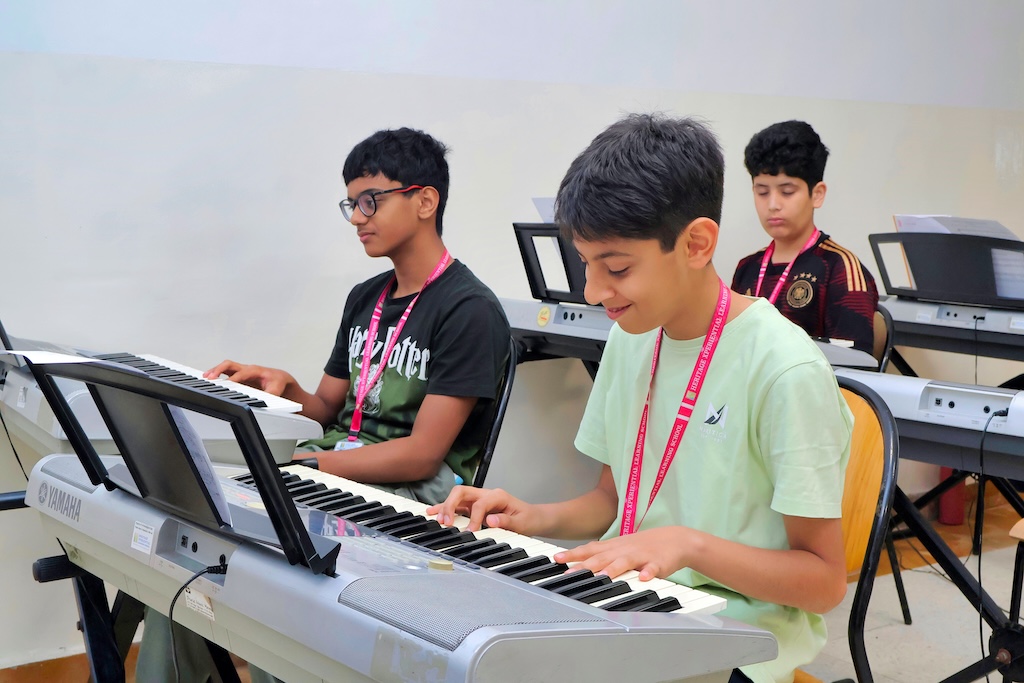
Best Schools in Gurgaon – CBSE vs IB: Which is Better for Your Child?
It is one of the most common conversations at school open days in Gurgaon – and it rarely arrives at a clean resolution. CBSE or IB? One parent is convinced the IB is more rigorous. Another argues that CBSE is better preparation for Indian competitive examinations. A third points out that the university their child eventually attended did not particularly care either way.
Everyone is partly right. Which is not especially helpful when you are trying to make a real decision for a specific child, in a specific family, with specific priorities.
This post is an attempt to cut through that noise – not to declare a winner, but to give families a more honest framework for thinking through the choice. And to explain where Heritage Xperiential Learning School sits in that picture.
What CBSE Actually Offers
The Central Board of Secondary Education is the most widely recognised board in India. Its curriculum is thorough, its examinations are nationally standardised, and its graduates are well prepared for JEE, NEET, and the other competitive entrance processes that remain the gateway to many of India’s most sought-after programmes.
CBSE works well for students who are focused on Indian universities and professional pathways – medicine, engineering, law – where entrance examinations are board-specific and preparation carries real weight. It also suits families who value a structured, clearly mapped framework with defined milestones at every stage.
Among the best schools in Gurgaon offering CBSE, Heritage delivers all of this – while layering an experiential, inquiry-driven approach on top of the curriculum. The goal is not simply to prepare students for examinations. It is to ensure they are developing as genuine thinkers in the process of doing so.
What the IB Actually Offers
The International Baccalaureate is an internationally recognised framework built around critical thinking, independent research, and global awareness. The Diploma Programme – taken in Grades 11 and 12 – is widely respected by universities across the United Kingdom, the United States, Canada, and Europe, and is gaining meaningful recognition from Indian institutions as well.
The IB places greater demands on students in terms of independent, self-directed work. The Extended Essay, Theory of Knowledge, and CAS portfolio all require sustained effort across multiple dimensions simultaneously. Students who tend to thrive are those who are genuinely engaged with their learning – not those who are primarily optimising for marks.
The IB is particularly well suited to families who are considering international university pathways, or who want a programme that develops broad, flexible intelligence – the kind that holds up well across a range of possible futures.
The Question That Actually Decides It
The CBSE versus IB debate becomes considerably clearer when families stop asking which board is better – and start asking which board is better for this child, in this family, with these particular priorities.
A student who is certain about medicine or engineering, whose family is settled in India long-term, and who performs well under structured examination conditions – CBSE is a strong, sensible, well-supported choice.
A student who is curious across multiple disciplines, whose family is open to international university options, and who would benefit from a programme that asks them to think rather than recall – the IB deserves serious consideration.
Many families find themselves genuinely uncertain at this point. That is not a problem. It is an honest reflection of a genuinely complex decision – one that depends on factors that no ranking or comparison article can fully resolve.
What Both Boards Have in Common at Heritage
Heritage works with families at both ends of this conversation. And the school’s position is consistent regardless of which board a family is considering: the board matters less than what happens inside the classroom every day.
A CBSE school that treats students as passive recipients of content will produce a certain kind of graduate. So will an IB school that prioritises the appearance of inquiry over the real substance of it. The board, on its own, guarantees very little about the quality of learning a child will actually experience.
What Heritage works to ensure – across both boards, across all year levels – is that students are genuinely active in their learning. Thinking, making, reflecting, and growing. Building real capability rather than accumulating the outputs of successful test preparation.
When families look at the top CBSE schools in Gurgaon or the strongest IB options in the city, the question worth asking at every school is the same: what is actually happening in the classroom, and what kind of person is this school helping my child become? At Heritage, that question has a clear answer – and it holds across both programmes.
Conclusion
The CBSE versus IB question does not have a universal answer. It has the right answer for your child – and finding that answer requires thinking carefully about who your child is, where they are headed, and what kind of learning environment will help them get there.
Heritage Xperiential Learning School offers both programmes, and the support to help families make that decision thoughtfully. If you are ready to take the next step, begin your CBSE admission enquiry in Gurgaon today – or reach out to arrange a campus visit. The admissions team will help you find the right path forward.
Latest Posts
Experiential Schools in Gurgaon: Why HXLS Has Been a Pioneer…
06 August, 2026
School Admission in Gurgaon: Complete Guide for Parents (2026)
03 August, 2026
CBSE Schools in Gurgaon vs Experiential Schools: What Parents Should…
30 July, 2026
Nursery Admissions Gurgaon: Everything You Need to Know Before Applying
27 July, 2026
Why Heritage Xperiential Learning School is Among the Best Schools…
23 July, 2026
Good Schools in Gurgaon: What Parents Should Really Look For
16 June, 2026
Top CBSE Schools in Gurgaon: Is Heritage the Right Choice…
11 June, 2026
10 THINGS PARENTS SHOULD DO TO ENSURE THAT THEIR SCHOOL…
17 July, 2021
WHY PULLING CHILDREN OUT OF E-CLASSES MAY CAUSE IRREVERSIBLE LOSS
16 July, 2021